
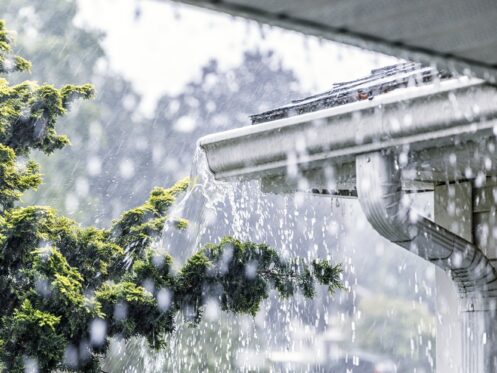
Los Angeles can go weeks without rain, so gutter trouble often stays hidden until the first real storm arrives. Then suddenly, water spills over the edge, pours near the windows, or lands beside the house. When gutters overflow, the cause usually comes down to a blockage, drainage problem, or system design issue. Knowing what to look for can help you address the problem before the next round of wet weather.
1. Leaves and Debris Are Blocking the Gutter
The most common reason for overflowing gutters at your home is very simple to understand. Leaves, seed pods, and small branches can collect in the gutter trough, creating a barrier that prevents water from reaching the downspouts.
Los Angeles weather makes this buildup deceptive. During long dry stretches, debris tends to sit and feel relatively light. Once it rains, that material will absorb water, making it heavier and creating a dense blockage. The result is a small dam that forces rainwater to rise until it spills over the gutter edge.
You may also notice plants sprouting from badly clogged gutters, especially when dirt and organic material remain in place for months. That greenery may look almost impressive, but it’s a sign that the gutter has stopped functioning as a drainage channel.
2. The Downspouts Are Clogged
A gutter trough can appear clear and still overflow if the downspout can’t carry water away. Debris often collects right at the downspout opening, but leaves, twigs, and compacted dirt can also lodge deeper inside the vertical pipe.
One clue is overflow concentrated near a corner of the roof. You may also notice very little water leaving the bottom of the downspout during rain, even though water is pouring off the gutter above. Sometimes, water backs up and bubbles near the downspout connection. A clogged downspout creates a traffic jam for the entire gutter run. Water continues entering from the roof, but it has nowhere to go. Clearing the gutter without checking the downspout may leave the main cause untouched.
3. The Gutters Are Sloped Incorrectly
Gutters need a slight pitch toward the downspouts so that gravity can move water in the right direction. If the trough is too flat, slopes away from the outlet, or has an uneven angle, water may pool rather than drain.
Gutter alignment can change over time. Loose fasteners or sections pulling away from the fascia can change the pitch enough to create standing water. You may notice one area that stays wet long after the rain ends or a section where water spills despite having no obvious debris blockage. An incorrect slope can also cause dirt to settle more quickly because water does not move fast enough to carry it away.
4. The Gutters Are Too Small for the Roofline
Sometimes, the gutter system is clean and properly aligned, but it still can’t handle the amount of water coming off the roof. Long roof runs, steep slopes, and roof valleys can direct a large volume of rain into one small section at once.
Too few downspouts will make the problem worse. If a long gutter run depends on a single outlet, water may enter faster than the system can drain it. This is usually a capacity or design issue rather than a basic cleaning issue. Repeated overflow in the same spot, even after professional cleaning, may signal that the system needs additional drainage capacity.
5. Sagging Sections Are Holding Water
A sagging gutter will create a low point where water and debris collect. Instead of flowing toward a downspout, rainwater settles in the middle of the run and adds more weight to the weakened section. The added weight of standing water and wet debris can make the sag worse over time. Early inspection matters because a small dip can eventually lead to additional damage.
6. Heavy Rain Is Overwhelming the System
Even clean gutters will overflow during an intense downpour. If rain falls faster than the downspouts can carry it away, water may rise over the edge. Long dry periods can end with heavier storm events that will send roof debris toward your gutters all at once. That sudden combination of runoff and loose material can overwhelm your system.
7. Gutter Guards Are Clogged or Improperly Fitted
Gutter guards can reduce the amount of debris entering the trough, but they don’t make gutters maintenance-free. Leaves, roof grit, dirt, and palm debris can still collect on top of the guard, blocking water from passing through. When that happens, rain may sheet across the surface and spill directly over the edge. Poorly fitted guards can create a similar problem by redirecting water away from the gutter opening rather than guiding it into the gutter.
Some guard designs also allow smaller particles to enter and settle in the trough below. You may assume the gutters are clean because the guards hide the buildup, but the drainage channel underneath becomes increasingly restricted.
What Damage Can Overflowing Gutters Cause?
Water that spills over the gutter edge rarely lands in a harmless spot. It can soak fascia boards, run down your siding, and splash onto your walkways or landscaping. Repeated overflow may also send water toward areas near the foundation. Early gutter cleaning or inspection can help keep a small drainage problem from affecting other parts of the home’s exterior. It can also reduce the chance that dirty runoff leaves stains on surfaces.
Keep Water Moving Away From Your Home
Your gutters may not get a lot of attention during dry Los Angeles weather, but the first storm that you deal with may reveal months of hidden buildup in a hurry. Big City Window Cleaners provides professional gutter cleaning for residential and commercial properties, with responsive service that may be available the same day. As a licensed, insured, and award-winning local company founded in 2019, we help remove debris before clogged gutters create bigger exterior problems.
Contact us to schedule gutter cleaning in Los Angeles today.